Guest Post from Jason Fabus: Cannonball Adderley, Corcovado Take 2

Download the Transcription: EbBbC

This is actually an alternate take of the Jobim standard Corcovado done by Julian “Cannonball” Adderley from the album Cannonball’s Bossa Nova.  It has got to be one of my favorite albums of all time, and Cannonball shows why.  He has a very effortless way of playing, especially when attacking a difficult passage.  Please do listen to the recording to hear this.  While I may have notated all the notes, Cannonball does a great deal of “ghosting” notes throughout the section, gliding from phrase to phrase.  Challenge yourself not only to perform the notes with accuracy, but also the the style in which Cannonball presents them.


Guest Post from Sumner Truax: Miles Davis, So What


(The solo starts around 1:33 in the video)

[Thanks to Sumner Truax for today's guest post!  Check out more of Sumner's transcriptions and phenomenal classical recordings over at www.sumnertruax.com]

Download the Transcription: BbEbC

Kind of Blue is one of the most iconic jazz albums recorded to date.  This track and this solo are probably the most well-known recordings on that album.  Miles is one of my favorite horn players because everything he plays sits so perfectly in the pocket.  On this recording especially you can hear him playing primarily on the back side of the beat.  It sounds so effortless!  This is also a great study in melodic development since most of these ideas are just triads!

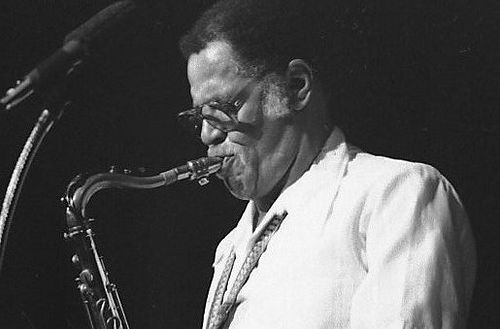
Dexter Gordon, Love For Sale


Audio clip: Adobe Flash Player (version 9 or above) is required to play this audio clip. Download the latest version here. You also need to have JavaScript enabled in your browser.

Download the Transcription: Bb, C, Bb_8vb, Eb

I’ve always loved this solo and when I had to pick a tune to memorize and perform in my improvisation class back in 2006, I jumped on the opportunity to learn this one. Dexter has this uber hip, uber cool way of playing that is so attractive to me. In one line he can play something totally inside the groove and in the next he’s laying his lines so far back the band finishes the tunes before he does. Continue reading

Joshua Redman, Straight, No Chaser (pt 1)


(The transcription starts at 1m35s in the video.)

Download the Transcription: Bb, Eb, C, Bass Clef

This is a great tenor battle between Joshua Redman and James Carter on the classic Monk tune “Straight, No Chaser.” This first transcription is only Joshua’s first four choruses. I’m planning on completing most (if not all) of the rest of this video over a series of 4-5 parts since it is quite lengthy.

Redman and Carter clearly have different approaches to the instrument and I find it very interesting to see how one kind of leads the other. In an aesthetic sense, I definitely prefer Redman’s style over Carter’s, but the two are so different and both players are clearly talented that I think it’s useless to talk about who “won” the battle. Though, if you read the youtube comments you’ll see there are fierce defenders in both camps. I think both players offer plenty to learn from. More to come in following posts. Happy shedding!

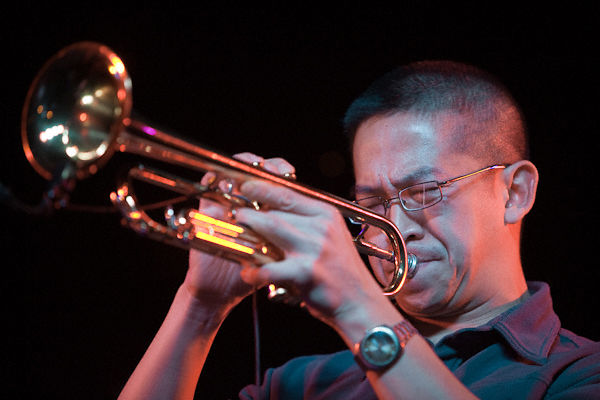
Cuong Vu, All The Things You Are

Download the PDF: Bb, Concert, Eb, Bass Clef

Audio clip: Adobe Flash Player (version 9 or above) is required to play this audio clip. Download the latest version here. You also need to have JavaScript enabled in your browser.

I just bought this record and when I heard this track, I immediately thought of transcribing some of this stuff for SoKillingMan. Vu picks a few of the most standard standards and plays them as the first few tracks of his record Leaps of Faith (2011). What’s great about it is that Cuong Vu does his Cuong Vu thing over these tunes. These old, overdone, dried-out standards sound like they could be just another original on his new album. Listen closely though, and the form, melody, and harmony become obvious in the tunes we know. Continue reading

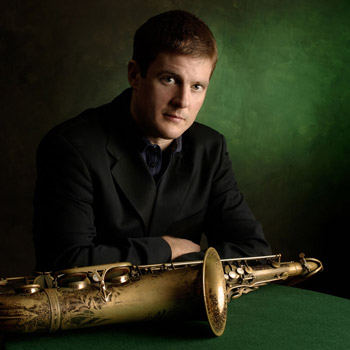
Guest post – Jorge Lima: Eric Alexander, On the Marc

Audio clip: Adobe Flash Player (version 9 or above) is required to play this audio clip. Download the latest version here. You also need to have JavaScript enabled in your browser.

(The clip starts at the first solo chorus)

Download the transcription: Bb

This a really amazing solo that will probably keep you busy for a long time if, like me, you decide to study it in depth. It is 17 choruses long and you can find it in David Hazeltine’s CD Autumn in Manhattan. This C7 blues solo is played at a very fast tempo. My recommendation is that you start playing it at about half the original speed and then gradually increase it as you begin to technically master the solo.

Continue reading

Gerry Mulligan, Walkin Shoes


(Solo starts at 0:56)

Download the Transcription: EbBbCBass

Gerry takes a “riff” like approach through out most of the solo and swings pretty damn hard. The start of the second bridge is probably my favorite part; the way he stretches out the time during those first two measures contrasts so nicely with the rest of the bouncy swing feel. Not many people can make the bari sing like Gerry can, definitely check him out if you haven’t before!

Guest Post: Blue Mitchell, Bluesville

Audio clip: Adobe Flash Player (version 9 or above) is required to play this audio clip. Download the latest version here. You also need to have JavaScript enabled in your browser.

Download the Transcription: BbC

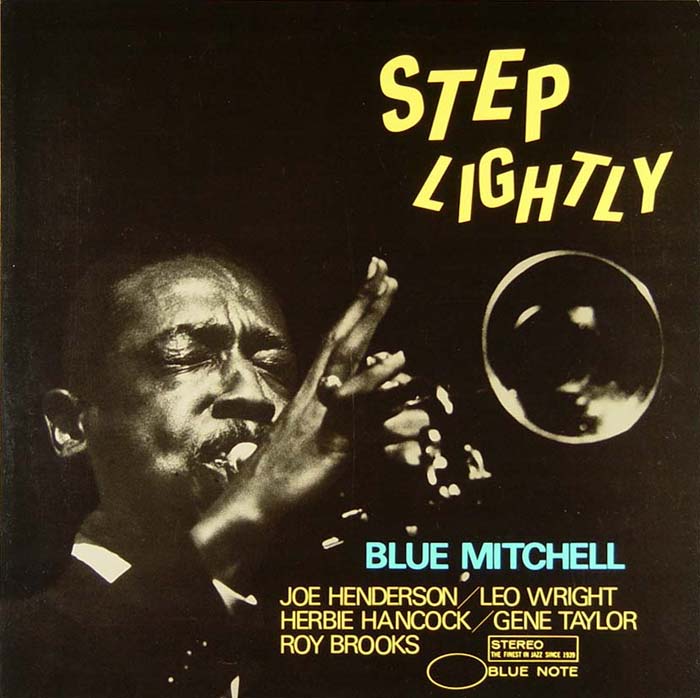
Blue Mitchell’s Solo on “Bluesville” from the album Step Lightly (1963). Players on album: Blue Mitchell (trumpet), Joe Henderson (tenor saxophone), Herbie Hancock (piano), Gene Taylor (bass), Roy Brooks (drum set). Transcribed by Lukas Skrove, Spring 2012. Solo begins 0’38’’

With transcribing the jazz language I’ve always been fascinated with the process of figuring out what the great players of the 50’s and the 60’s played. With such ease and flow their language of be-bop, and blues just feeds the ears of our generation with so much substance that I feel we sometimes miss out on. I’m a young musician trying to study this music and hopefully begin to understand it a little bit more with everyday that goes by. At school I try to transcribe as many solos as I can. This semester my trumpet teacher Adam Rossmiller came across this solo of Blue Mitchell’s and told me to check it out and transcribe it. So I did!

Continue reading

Chet Baker, My Little Suede Shoes

Audio clip: Adobe Flash Player (version 9 or above) is required to play this audio clip. Download the latest version here. You also need to have JavaScript enabled in your browser.

Download the PDF: Bb, Concert, Eb, Bass Clef

Melody!

If there is one thing no one can deny about Chet Baker, it is that he was a master of melody (and that he was a massive drug addict). These early 1954 live recordings show too that Chet was well-versed in the bebop language and had been listening to and even playing with Charlie Parker. It’s this early playing that I think is Chet’s most potent as an improvisor. Continue reading

Bennie Wallace, Straight No Chaser

Audio clip: Adobe Flash Player (version 9 or above) is required to play this audio clip. Download the latest version here. You also need to have JavaScript enabled in your browser.

(Clip starts at mm 36 of the transcription which is the start of the solo)

Download the Transcription: Bb

*I can’t seem to find my original Finale file for this transcription.  I’m in the process of creating a new one so that I can provide Eb, Concert pitch and bass clef versions of the solo; hopefully in the next few days.

This Bennie Wallace solo from the album Bennie Wallace Plays Monk is quite a unique approach to the blues form.  Quite honestly I don’t even know where to begin analyzing this solo in terms of harmonic language; this solo is far different from anything other I’ve looked at.  Bennie is clearly influenced by Monk in his use of harmony, interval jumps and even phrasing. In a few spots he is definitely basing his lines (or at least parts of his phrases) around certain intervals – typically starting low on the horn and jumping up by 6ths, 7ths, 8ths or 9ths.  A lot of the solo is “out” with respect to the chord changes which has a great tension building effect.  Bennie eases the tension a few times by hinting at a resolution to the 3rd of the I7 chord (see mm 83, 107-108, 217).

Starting around mm 145 the bass drops out making it a drum/sax duet.  This section builds to a frenzy with more frequent octave leaps (mm 151, 158, 163, 165, 173 etc…) and  more 16th note lines and flurries of notes up until the bass comes back in at mm 205.  Bennie counterbalances the frantic nature of the duet section by holding out a nice long G for three beats in mm 205 which brings the tension back down and leads to the end of Bennie’s solo.

I really wish I could provide the full solo for you to listen to because it is insanely awesome. Please check out Bennie’s website and pick up this track on Amazon or iTunes.  Definitely worth it to get some different ideas on the blues.