Nicholas Payton, You Stepped Out of a Dream

[amazon asin=B000VZFYP0&template=iframe image]
[audio:http://www.sokillingman.com/wp-content/uploads/2011/12/You-Stepped-Out-Of-A-Dream.mp3|titles=You Stepped Out Of A Dream]

Download the Transcription: BbEbCBass Clef

I got this disc when I was a freshman in college. My wife (girlfriend at the time) got it for me, and the first track that stuck out was this one. The groove is what first got me. The groove is this really great double time feel that is real open in the drums and piano. It just feels so good! And after hearing Nicholas’ playing on this track I knew I had to one day transcribe it. The first thing I noticed when I took some time to dig in was that they play with a double time feel, so it sounds like the chord changes go by at half speed. Payton’s solo fits so gently in to the groove, he’s simply an extension of the rhythm section.
Continue reading

If I Were A Classical Musician

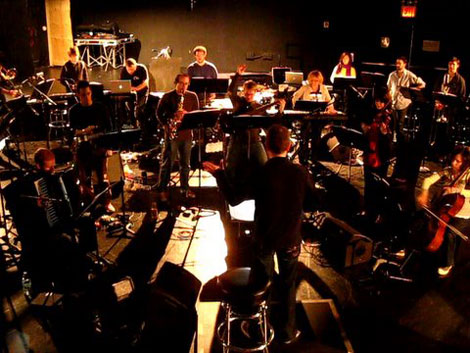
A Premier at Le Poisson Rouge, NYC. Courtesy http://www.brooklynvegan.com

Next month, I will graduate from the U of MN with a Masters degree in trumpet performance. My studies in my Masters program have been primarily in the classical trumpet field, though I did serve as the jazz theory TA for a semester, and have taken jazz comp lessons for three semesters (I have a BA in Jazz Studies). So when I say “If I were a classical musician….” I mean to say that I do not identify as a classical musician because the majority of the playing I do professionally is in a jazz setting.

So…If I were a classical musician, I would be treating my art as if I were a jazz musician. Jazz musicians are self-made performers. They grind it out searching for clubs that will have their music and pay them a little money to play it. When they’re not playing a gig, they’re likely practicing, transcribing, rehearsing or blogging about their art. They are visible, and they treat themselves sort of the same way a rock band might. You promote your music, play in clubs, and try and build a fan base. Really, jazz musicians look at themselves as independent musicians. Period. Not “jazz musicians,” just “musicians.” This at least does away with all the recent “jazz is dead” talk, and allows you to simply function as someone who makes good music. If you make good music, and you believe people will enjoy it, then who cares what it is called?

So why are classical musicians not acting this way? Continue reading

Greg Cohen and Dave Douglas, Charms of the Night Sky

[amazon asin=B002M9LM8G&template=iframe image]
[audio:http://www.sokillingman.com/wp-content/uploads/2011/11/Charms-of-the-Night-Sky_web_clip-bass.mp3|titles=Charms of the Night Sky_web_clip (bass)]

Download the PDF: concert pitchBbEb

Charms of the Night Sky, written by Dave Douglas and performed by: Dave Douglas, trumpet; Greg Cohen, acoustic bass; Mark Feldman, violin; Guy Klucevsek: accordion.  From Charms of the Night Sky, recorded 1998 and released on the Winter & Winter label.

Continue reading

Clifford Brown and Harold Land, The Blues Walk

[amazon asin=B000VZMR6O&template=iframe image]
[audio:http://www.sokillingman.com/wp-content/uploads/2011/11/The-Blues-Walk.mp3|titles=The Blues Walk]

Download the Transcription

This album is pretty special to me because it was one of the first jazz albums I ever really got into.  Harold Land and Clifford Brown are probably the first two jazz musicians that I really studied and tried to emulate and have had quite an influence on me.  This selection in particular has stuck with me a) because it’s just really fun to listen to Clifford and Harold trading all the way down to 1/2 measures and b) it demonstrates a high level of communication between these musicians.

Continue reading

Transcription Applications and Techniques

A big reason why I learned how to transcribe is so that I can write out charts for myself, and other musicians I’m playing with.  It seems like there’s always new repertoire for everyone to learn, members to add/replace or a sub to train, and the reality is that not everybody does their homework.  There’s not always time, and you don’t always have the $$ to pay somebody who’s willing or able to put in the work and accurately learn/memorize a part.

Continue reading

Mark Feldman, Charms of the Night Sky

Mark Feldman – violinist (photograph by Valerie Trucchia)

[amazon asin=B002M9P6SS&template=iframe image]
[audio:http://www.sokillingman.com/wp-content/uploads/2011/11/Charms-of-the-Night-Sky_web_clip-vln.mp3]

Download the PDF: C, Bb, Eb, Bass Clef

Charms of the Night Sky, written by Dave Douglas and performed by: Dave Douglas, trumpet; Greg Cohen, acoustic bass; Mark Feldman, violin; Guy Klucevsek: accordion.  From Charms of the Night Sky, recorded 1998 and released on the Winter & Winter label.


I’ve been drawn to this solo (the whole album, really) since the first time I heard it.  I love the combined timbres of accordion+violin and accordion+trumpet, and so many beautiful textures and combinations are explored on this album.  Even just during the violin solo.  One thing that really turned me onto this solo in particular is the subtly nebulous nature of the rhythm which seems to fight the underlying rhythm, but without sounding ‘wrong’ in any sense of the word.  (I first noticed this kind of rhythmic stretching/contracting listening to Miles Davis, such as his solos on Sweet Pea and the title track of the album Water Babies – it’s really inspiring how Miles goes in and out of the groove without disrupting it.) Continue reading

Chet Baker, Zing! Went the Strings of my Heart

[audio:http://www.sokillingman.com/wp-content/uploads/2011/11/Zing-Went-The-Strings-Of-My-Heart.mp3|titles=Zing Went The Strings Of My Heart]

Download the PDF: CBb, EbBass Clef

“Zing! Went the Strings of My Heart,” solo by Chet Baker, From Quartet Live Vol. 3 (Aug 1954).

What I love about this solo is how surprised I was when I found out this was Chet Baker. The tempo is absolutely blazing fast and Chet just rips this tune apart playing a mix of beautiful melodies and chromatic eighth notes. Chet is known for slow songs, and his eerie singing, but this track shows why Charlie Parker was so excited to play with Chet with Parker got stuck in LA. This recording is part of a set of nights in LA with Chet’s quartet, right after Chet gets back from touring with Bird. I have all three nights (Quartet Live Vol1, 2 & 3) and they’re all phenomenal. It’s clear that this early playing by Chet is the reason Bird warned Miles and Dizzy of a this guy out on the West Coast.

Continue reading

Chris Potter, All the Things You Are

[audio:http://www.sokillingman.com/audio/potter-all-the-things.mp3]

Download the Transcription: Tenor Sax, Concert Pitch

To anyone that knows me it’s no secret that Chris Potter is one of my favorite musicians and this recording is a prime example of why.  I’ve heard a number of criticisms about this recording citing that it is too technical and not very musical.  While I patently disagree (true it is very technical, but I find it to be extremely musical as well) I think given the context of the recording, a masterclass at Youngstown University, it makes perfect sense that Chris would emphasize his virtuosic ability as a way of demonstrating what is possible as a saxophonist and as an improvising musician.

Continue reading

Curtis Fuller, Blues March

[amazon asin=B000VRO8BE&template=iframe image]
[audio:http://www.sokillingman.com/wp-content/uploads/2011/10/Blues-March_web_clip.mp3|titles=Blues March_web_clip]

Download the PDF: Treble Cleff, Bass Cleff

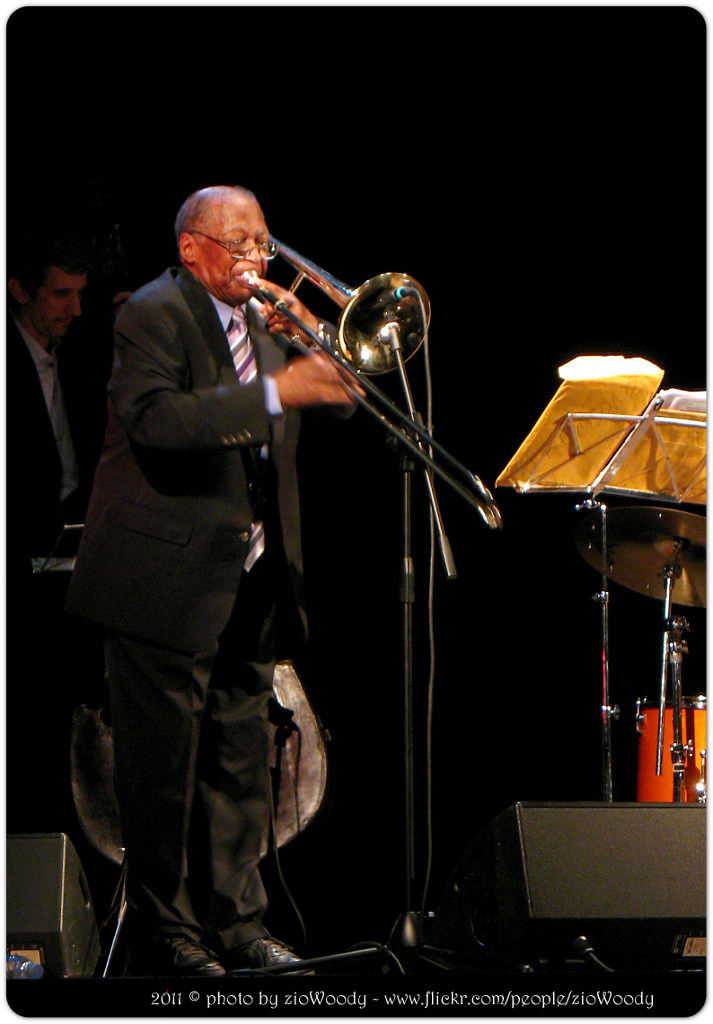
Blues March, written by Benny Golson and performed by the Jazztet: Art Farmer, trumpet; Benny Golson, tenor sax; Curtis Fuller, trombone; McCoy Tyner, piano; Addison Farmer, bass; Lex Humphries, drums.  From Meet the Jazztet (LP), recorded 1960, re-released (CD) 1991 by Geffen Records.

Continue reading